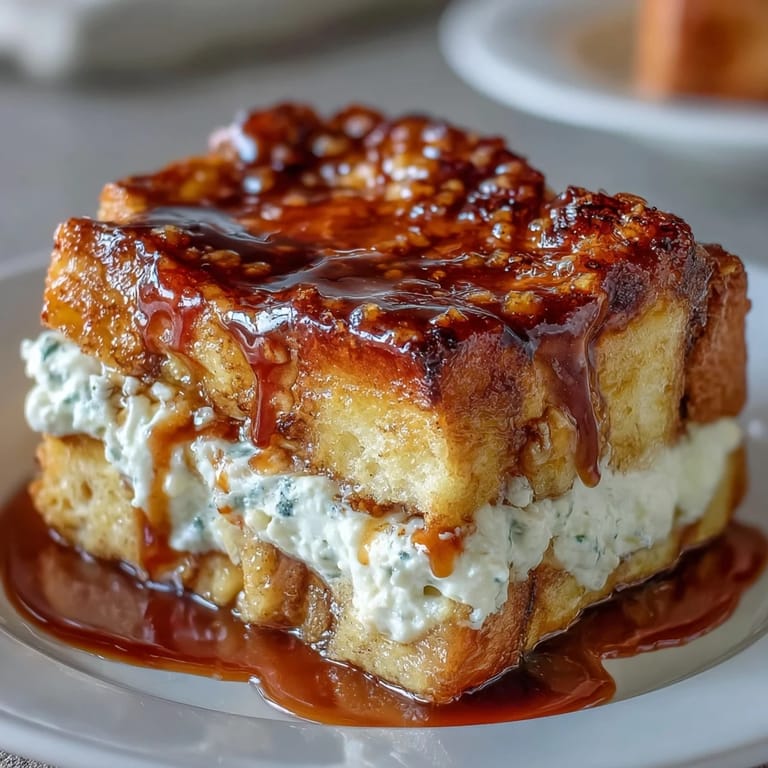
 Pin it
 There's something magical about waking up to a casserole that's been quietly soaking overnight, waiting to transform into breakfast magic. My neighbor brought this to a holiday brunch years ago, and I watched guests go back for thirds—which never happens. The combination of custardy bread, pockets of tangy cream cheese, and ribbons of caramel felt almost sinful for something that required zero morning effort. That's when I knew I had to master it.
I made this for my sister's baby shower on a gray April morning, and I remember being nervous about whether the overnight soaking would work as promised. When I pulled it from the oven, the kitchen smelled like a caramel candy shop mixed with vanilla custard, and three people asked for the recipe before anyone even sat down. That's when I realized this wasn't just a casserole—it was a conversation starter.
Ingredients
- Brioche or challah bread (about 500 g, cut into 1-inch cubes): The soft crumb soaks up custard beautifully without turning mushy, which is exactly what you want here.
- Cream cheese, softened (225 g): Don't skip the softening step or you'll end up with lumps that won't blend smoothly into those pockets.
- Whole milk (240 ml): The fat content matters more than you'd think for richness.
- Heavy cream (240 ml): This is the secret to a custardy texture that doesn't feel heavy.
- Large eggs (5): Room temperature eggs mix more evenly into your custard base.
- Unsalted butter, melted (60 g): Adds richness and helps with browning.
- Granulated sugar (150 g): Use this for the cream cheese layer and the custard.
- Packed light brown sugar (100 g): Brings deeper flavor to the custard without overpowering.
- Pure vanilla extract (2 tsp): Don't use imitation—the taste difference shows up in a dish this simple.
- Ground cinnamon (½ tsp): A whisper of warmth that ties everything together.
- Salt (¼ tsp): Balances the sweetness so your taste buds don't get tired.
- Caramel sauce (240 ml, store-bought or homemade): Use good quality caramel—it's worth the upgrade since it's a major player here.
Tired of Takeout? 🥡
Get 10 meals you can make faster than delivery arrives. Seriously.
One email. No spam. Unsubscribe anytime.
Instructions
- Prepare your vessel:
- Butter a 9 x 13 inch baking dish generously so nothing sticks to the sides and you can slide the whole thing out cleanly.
- Build the bread base:
- Spread half your cubed brioche evenly across the bottom, letting pieces nestle together naturally without compressing them.
- Create the cream cheese pockets:
- Beat softened cream cheese with ¼ cup sugar and 1 tsp vanilla until it's completely smooth and spreadable, then dollop it in spoonfuls across the bread layer so every forkful gets a surprise hit of tangy sweetness.
- Add the first caramel layer:
- Drizzle half your caramel sauce over the cream cheese and bread, letting gravity do most of the work rather than spreading it around.
- Top with remaining bread:
- Scatter the rest of your bread cubes on top, filling in gaps so you have even layers.
- Mix the custard:
- Whisk together eggs, milk, cream, melted butter, remaining sugars, vanilla, cinnamon, and salt until it looks completely uniform—no sugar crystals hiding at the bottom of the bowl.
- Pour and soak:
- Pour your custard mixture evenly over all the bread layers, then press down gently with a spatula so the bread absorbs the liquid without falling apart. You want it drunk but intact.
- Chill overnight:
- Cover the dish tightly with plastic wrap and refrigerate at least 8 hours, or up to 24 hours—the bread keeps soaking up custard, which is exactly what you want.
- Bake to golden:
- Preheat your oven to 350°F and bake uncovered for 40 to 45 minutes until the top is deep golden brown and the center barely jiggles when you shake the pan. If it's browning too fast, lay a sheet of foil loosely on top.
- Final caramel drizzle:
- Warm your remaining caramel sauce and drizzle it generously over the casserole just before serving so it's still glossy and warm.
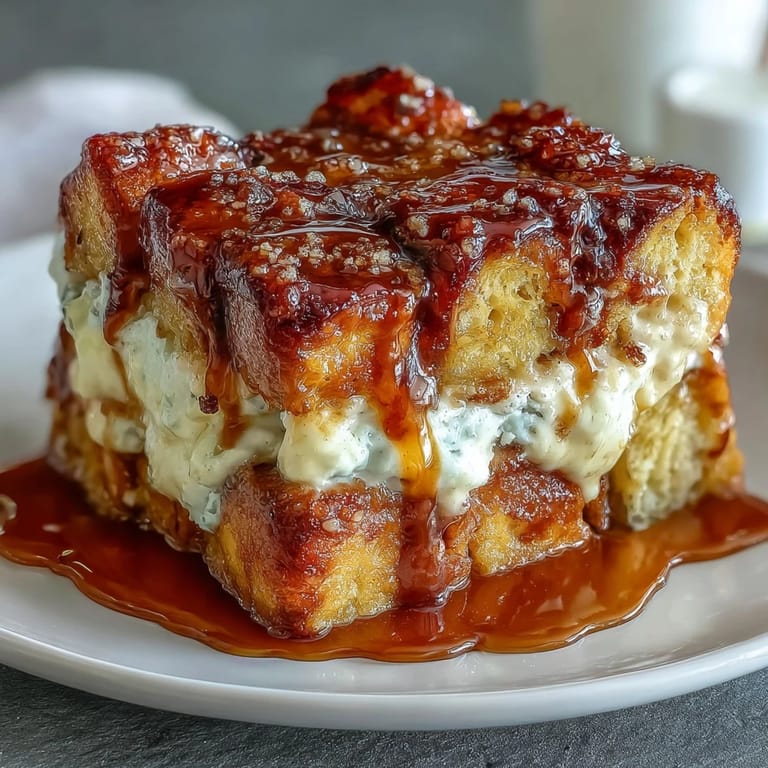 Pin it
 Years later, I served this at my daughter's first birthday brunch, and watching grown adults go quiet when they took that first bite said everything. That's when food stops being about technique and becomes about creating moments people remember.
The Overnight Soak Secret
The magic really does happen while you sleep. Those bread cubes slowly drink in the custard mixture, transforming from crispy-edged cubes into something custardy and tender that holds its shape. I learned this the hard way by trying to rush the recipe once, and the texture was completely different—drier and less cohesive. Patience here isn't optional, it's essential.
Cream Cheese Pockets and Caramel Balance
The combination of tart cream cheese and sweet caramel keeps this casserole from tasting one-dimensional. The cream cheese needs to be at room temperature so it mixes smoothly without lumps that refuse to incorporate. I've also discovered that dolloping it rather than spreading creates little flavor explosions throughout—some bites are more caramel-forward, others hit you with cream cheese tang. Both approaches work, but the pockets make it more interesting.
Timing, Browning, and Those Finishing Touches
Every oven behaves differently, so aim for the casserole to be golden on top and just barely set in the center—not jiggly, but not overcooked either. The foil tent is your friend if browning happens too quickly. Fresh berries or a dollop of whipped cream on the side adds brightness that cuts through the richness, and chopped pecans on top add texture if you're feeling fancy.
- Stale bread from the bakery section works better than day-old sliced sandwich bread.
- Make this up to 24 hours ahead so your morning is truly hands-off.
- Leftovers taste amazing cold or gently reheated, so don't feel guilty making extra.
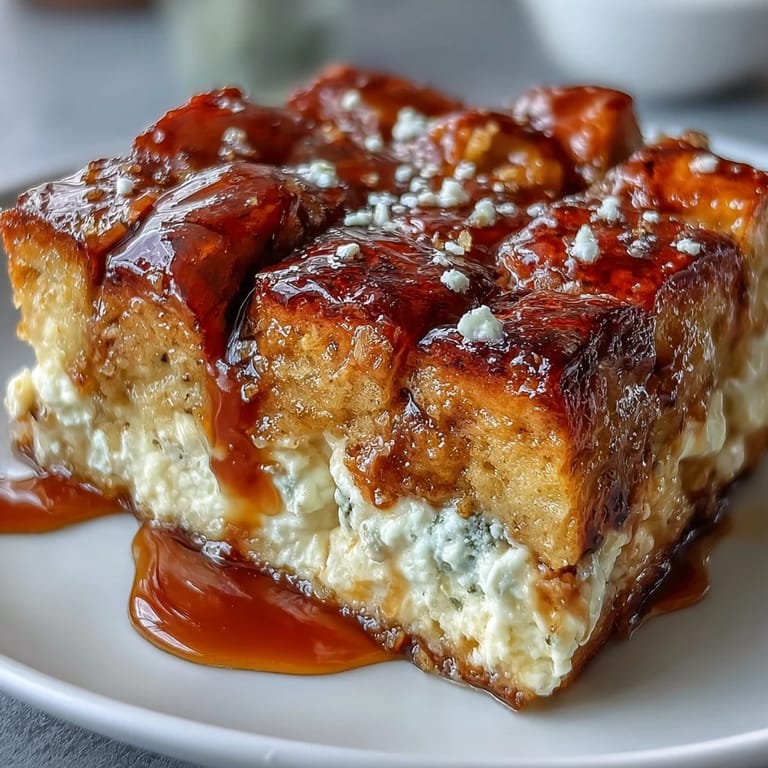 Pin it
 This casserole has become my go-to when I want to feed people something that feels fancy without requiring me to stand at the stove. It's the kind of dish that makes you feel genuinely proud.
Recipe Questions & Answers
- → Can I use different bread types?
While brioche and challah provide the best texture due to their rich, eggy composition, you can substitute with thick-cut Texas toast, French bread, or even croissants. Avoid using sandwich bread as it may become too mushy during the overnight soak.
- → How long should I refrigerate the casserole?
The minimum chilling time is 8 hours, ideally overnight. This allows the bread to fully absorb the custard mixture, resulting in that creamy, pudding-like interior texture. You can prepare it up to 24 hours in advance before baking.
- → Can I freeze this before baking?
Yes, assemble the complete casserole, wrap tightly with plastic and foil, and freeze for up to 1 month. Thaw overnight in the refrigerator before baking as directed. You may need to add 5-10 minutes to the baking time if it's still slightly frozen.
- → Why is my casserole soggy in the middle?
Sogginess usually means underbaking. Ensure your oven is fully preheated and bake for the full 40-45 minutes. The center should be set, not jiggly. If the top browns too quickly, tent with foil and continue baking until fully set throughout.
- → Can I reduce the sugar content?
You can reduce both sugars by 25-30% for a less sweet version, though this will affect the caramelization and texture. For a natural alternative, try maple syrup or honey in place of some granulated sugar, though this may slightly alter the browning.
- → What toppings work well besides caramel?
Fresh berries, sliced bananas, warm maple syrup, toasted pecans or walnuts, whipped cream, or a dusting of powdered sugar all complement the rich flavors. A side of crispy bacon provides nice salty contrast to the sweet dish.