 Pin it
 I discovered this arrangement one afternoon while browsing a luxury food shop, where a marble slab held blue and white cheeses scattered like precious stones. The contrast caught my eye immediately—those deep veins of Roquefort against pale aged cheddar created something almost architectural. When I recreated it at home, I realized how effortless elegance can be: just good cheese, a beautiful surface, and enough restraint to let them speak for themselves.
The first time I made this for a dinner party, my friend asked if I'd hired a caterer. I hadn't—I'd just invested in a proper marble slab and trusted the cheeses to do the work. That moment taught me that presentation isn't about complexity; it's about respecting good ingredients enough to let them be the centerpiece.
Ingredients
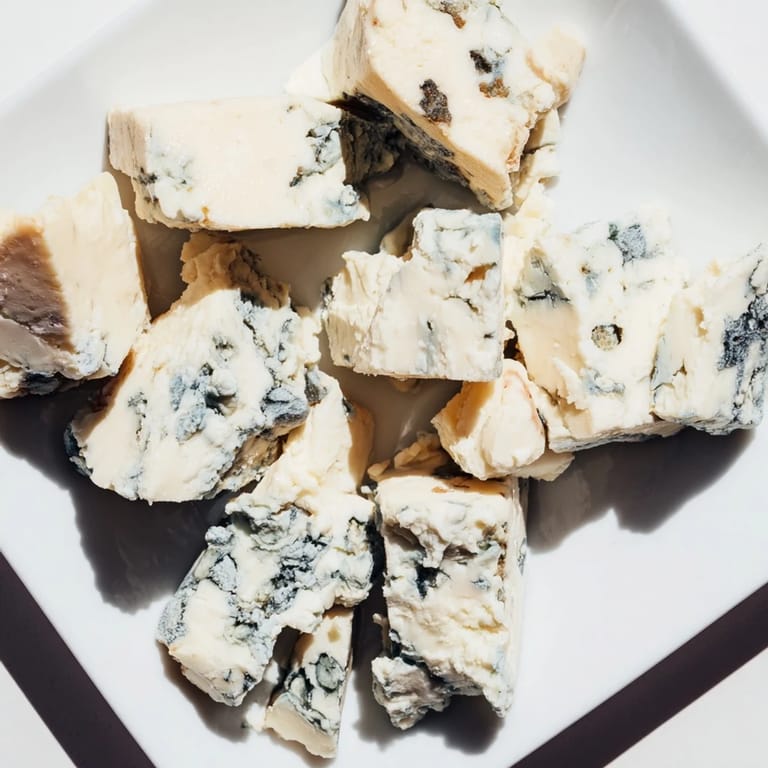
- Blue cheese (Roquefort, Gorgonzola, or Stilton), 200 g: The funky, salty soul of this board; cut into chunks rather than thin slices so people understand they're choosing real cheese, not decoration.
- Aged white cheddar, 200 g: Provides a creamy sweetness and dense texture that balances the blue's intensity; look for sharp aged varieties to add depth.
- Fresh grapes or sliced pears (optional): Their natural sweetness softens the cheese's assertiveness and adds textural contrast.
- Assorted crackers or crusty bread: Choose quality options because they're a direct conduit to the cheese; bland crackers waste good cheese.
- Honey or fig jam (optional): A drizzle transforms a simple cheese board into something memorable.
Tired of Takeout? 🥡
Get 10 meals you can make faster than delivery arrives. Seriously.
One email. No spam. Unsubscribe anytime.
Instructions
- Chill your stage:
- If you have time, place the marble slab in the refrigerator for 15 minutes before arranging; this keeps the cheeses cool longer and prevents them from softening unevenly under warm lights.
- Cut with intention:
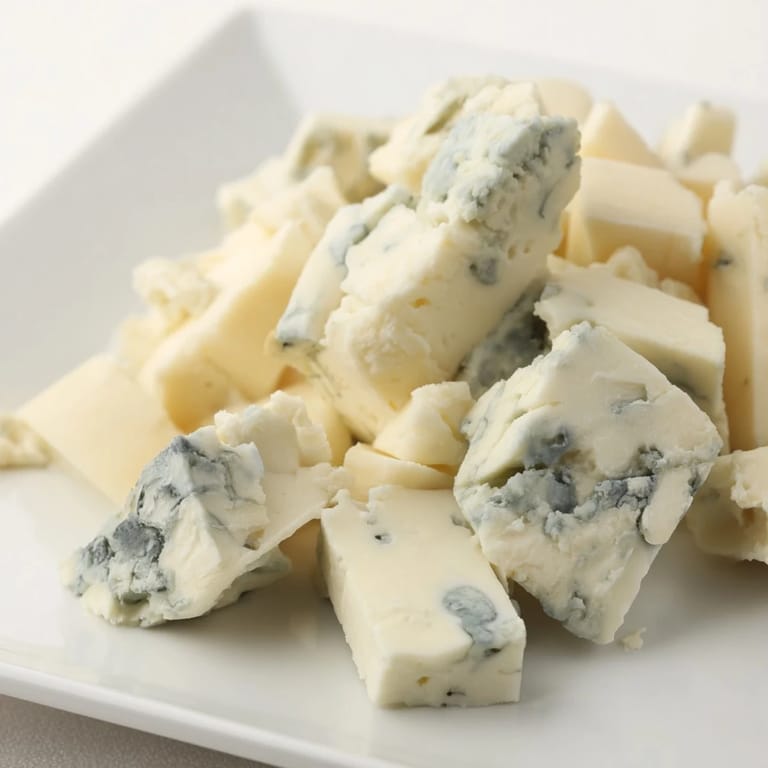
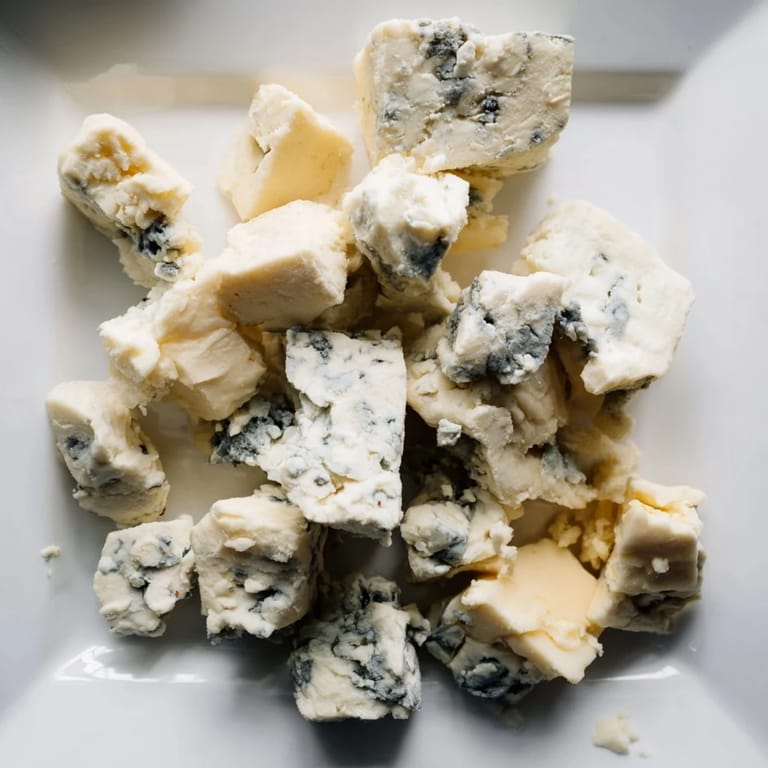
- Break the cheeses into irregular chunks—not uniform cubes—because the varied sizes create that quarry texture and make pieces feel less formal, more inviting.
- Scatter strategically:
- Arrange the cheeses across the marble with breathing room between each piece, grouping by color so the contrast hits immediately; avoid the temptation to fill every gap.
- Add the quiet accents:
- Tuck grapes or pear slices into the negative space, positioning small bowls of honey at natural focal points so people discover them rather than feel guided.
- Serve at the right moment:
- Bring crackers and bread separately on a small board nearby; this prevents the marble from becoming cluttered and keeps the focus on the cheeses.
 Pin it
 A friend once brought this board to a potluck, and for the first time, I watched people gather around a cheese arrangement the way they'd gather around conversation. That's when I understood that food presentation isn't vanity—it's an invitation to slow down and pay attention.
Choosing Your Cheeses
The magic of this board lives in the contrast between two distinct personalities. Blue cheese brings funk, salt, and complexity—Roquefort is elegant and restrained, Gorgonzola is creamy and bold, Stilton is earthy and mineral. White aged cheddar provides a stable, slightly sweet anchor that lets the blue's intensity shine without overwhelming. If you want to experiment, a third cheese (creamy goat cheese or a golden washed-rind) adds another conversation starter, but two cheeses in clear contrast is often perfect.
The Art of Empty Space
The quarry metaphor works because it suggests depth and mining—those gaps between chunks create visual rest and let each piece be appreciated individually rather than as part of a carpet. This isn't filler space; it's composition. When you resist the urge to fill every centimeter, you actually make the arrangement feel more generous and intentional, not less.
Beyond the Marble
This arrangement works on slate, on wood, even on a simple dark linen cloth if marble isn't available. The principle remains the same: good contrast, thoughtful spacing, quality ingredients allowed to be themselves. I've made this on whatever surface I had at hand, and the result was always better than I expected because restraint and respect for the ingredients matter far more than perfection or expense.
- Pair with crisp white wine or a light-bodied red to let both cheeses show their best side.
- Prepare this no more than 2 hours before serving to keep cheeses at their ideal texture and flavor.
- If you add honey, warm it gently so it drizzles—cold honey won't flow and stays in an unappealing blob.
 Pin it
 This board teaches that sometimes the simplest presentations carry the most weight. It's proof that you don't need to complicate food to make it unforgettable.
Recipe Questions & Answers
- → What types of cheeses are ideal for this presentation?
Large chunks of blue cheese such as Roquefort or Gorgonzola and aged white cheddar create a bold flavor and appealing contrast.
- → Why use a marble slab to serve the cheeses?
The chilled marble keeps the cheeses cool and firm, enhancing their texture and presentation while providing a dramatic visual backdrop.
- → Can I add other accompaniments to the display?
Fresh fruits like grapes or pears, honey, fig jam, and assorted crackers complement the cheeses and enhance flavor variety.
- → How should I prepare the cheeses for serving?
Cut cheeses into large, irregular chunks to create an organic, quarry-like arrangement with space to appreciate each piece.
- → What wine pairs well with this cheese arrangement?
Crisp white wines or light-bodied reds complement the strong flavors without overpowering them.
- → Is this suitable for special diets?
It works well for vegetarian and gluten-free diets if bread or crackers are omitted or carefully chosen.