 Pin it
 There's something about arranging vegetables in a bowl that feels like painting with food. I discovered this rainbow buddha bowl on a Tuesday when my fridge was overflowing with produce and I was tired of cooking the same meals. The ginger sesame dressing hit me like a revelation—so simple, yet it transformed every bite into something genuinely exciting. Now I make it whenever I need to feel grounded and nourished, and honestly, it's become my go-to answer when friends ask what I'm eating for lunch.
I remember making this for my sister when she was going through a phase of eating only whole foods, and watching her face light up when she tasted the dressing was worth every second of prep work. She asked for the recipe immediately, which almost never happens with her, and I felt oddly proud standing in my kitchen having created something that actually mattered to her. That's when I realized this bowl wasn't just about nutrition—it was about care made visible.
Ingredients
- Brown rice or quinoa (1 cup uncooked): Brown rice is heartier and more forgiving if you're new to cooking grains, while quinoa has a fluffier texture and complete protein, so pick whichever speaks to your mood that day.
- Cherry tomatoes (1 cup, halved): They burst with sweetness when you halve them and help balance the earthiness of the grains beautifully.
- Red cabbage (1 cup shredded): This stuff is tough as nails when raw, which means it stays crunchy and adds a peppery bite that cuts through richness.
- Carrots (1 cup shredded): Raw shreds are naturally sweet and add a satisfying texture contrast that cooked vegetables simply can't match.
- Yellow bell pepper (1, thinly sliced): The thinness is key—it lets the pepper stay tender while still feeling fresh and not overwhelmed by other flavors.
- Broccoli florets (1 cup): I leave mine raw most of the time because the crunch is addictive, but a light steam makes them gentler if that's your preference.
- Avocado (1, sliced): Wait to slice until you're actually assembling, or it'll turn that sad brownish color and lose its appeal.
- Cooked chickpeas (1 cup, canned and rinsed): Rinsing canned chickpeas removes excess sodium and that metallic tinny taste you sometimes get otherwise.
- Sesame seeds (2 tbsp) and fresh cilantro or parsley (2 tbsp): These are your finishing flourishes—don't skip them because they're what makes this feel intentional rather than thrown together.
- Green onions (2, sliced): They add a whisper of sharpness that wakes up your palate right when you need it.
- Toasted sesame oil (3 tbsp): This is non-negotiable—regular sesame oil tastes flat by comparison, so hunt down the toasted version.
- Tamari or soy sauce (3 tbsp): Use tamari if gluten bothers you or if you want a slightly rounder, less salty flavor.
- Rice vinegar (2 tbsp): Its gentle acidity won't overpower the dressing the way regular vinegar might.
- Maple syrup or honey (1 tbsp): Both work, but maple syrup feels more sophisticated and pairs better with the ginger in my opinion.
- Fresh ginger (1 tbsp, grated): Grate it right before mixing the dressing so you capture all that bright, spicy heat that mellows if it sits too long.
- Garlic (1 clove, minced) and lime juice (from 1 lime): The garlic should be finely minced so it distributes evenly, and fresh lime juice (not the bottled stuff) makes an actual difference in brightness.
Tired of Takeout? 🥡
Get 10 meals you can make faster than delivery arrives. Seriously.
One email. No spam. Unsubscribe anytime.
Instructions
- Cook your grains while prepping everything else:
- Rinse your brown rice or quinoa under cold water until the water runs clearer, which removes excess starch and prevents gumminess. Add it to a pot with the water, bring to a boil, then lower the heat and let it simmer covered for 15 to 20 minutes until the liquid is absorbed and the grains are tender.
- Assemble your vegetable station like a mise en place:
- While grains are cooking, wash and chop everything according to the ingredient list—halve the tomatoes, shred the cabbage and carrots, slice the pepper thin, and cut the broccoli into bite-sized florets. Having it all prepped means assembly becomes almost meditative rather than chaotic.
- Whisk together the dressing and taste as you go:
- In a small bowl, combine sesame oil, tamari, rice vinegar, maple syrup, fresh ginger, minced garlic, and lime juice, whisking until everything is emulsified and the ginger is dispersed throughout. Don't skip tasting it straight from a spoon—you might want a little more lime for brightness or another drizzle of maple syrup for balance.
- Decide on your broccoli texture:
- If you want it softer, gently steam the florets for three to four minutes, or leave them raw if you're craving that satisfying crunch. Either way, it should still feel fresh and vibrant when it hits the bowl.
- Arrange your bowl like you're plating at a restaurant:
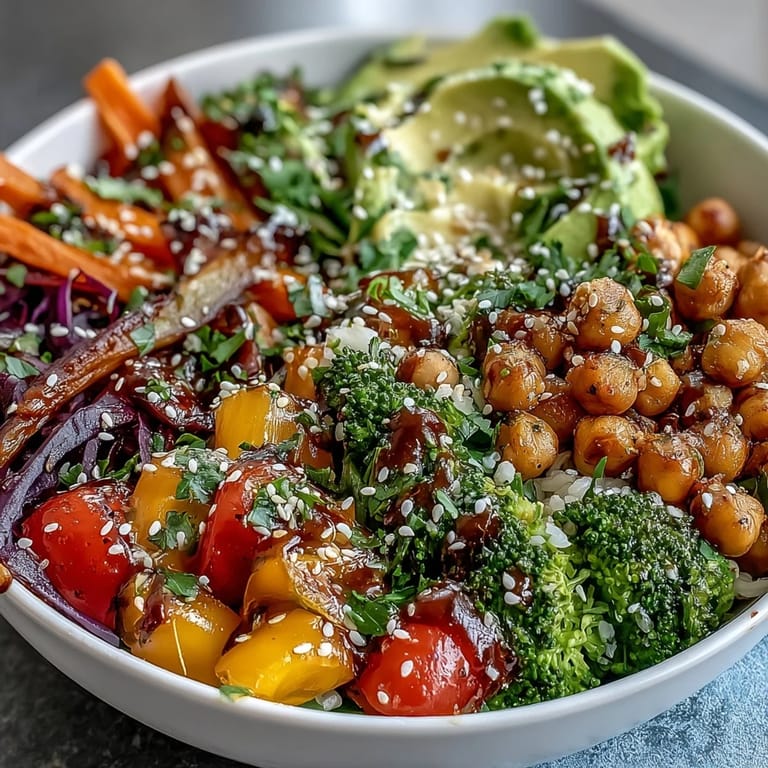
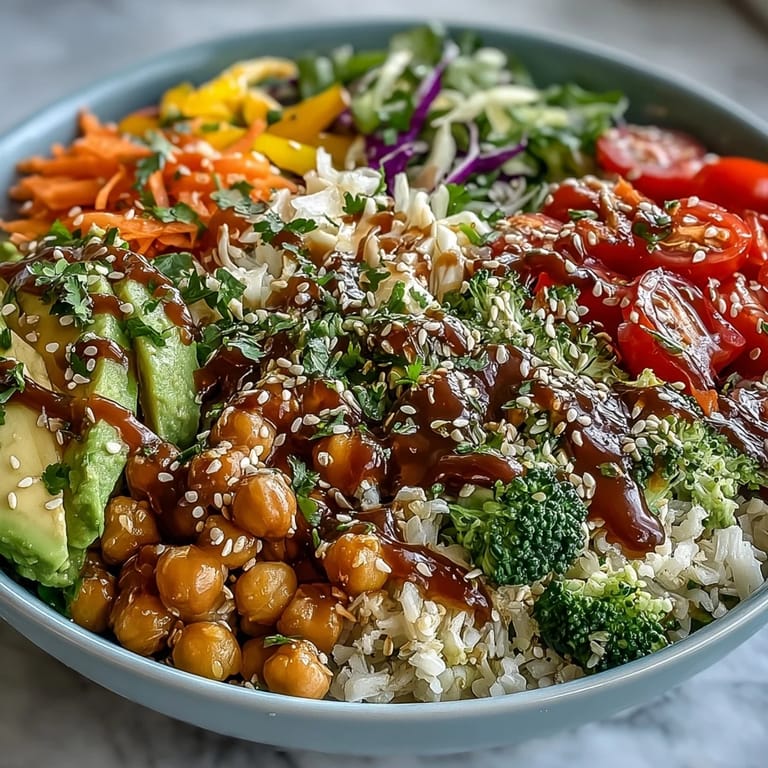
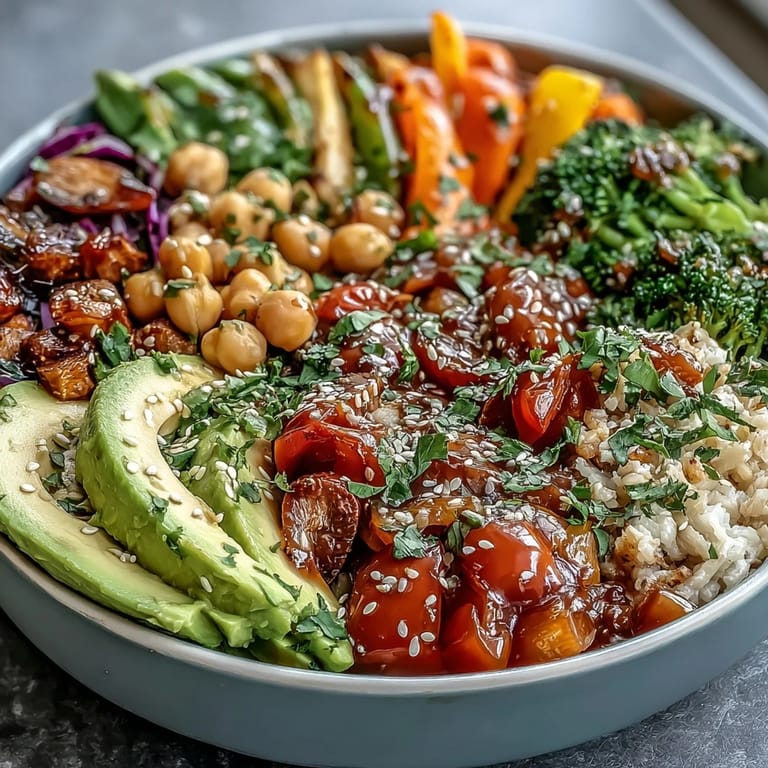
- Start with a bed of cooked grains in each of four bowls, then arrange each vegetable and the chickpeas in its own section around the bowl, creating that gorgeous rainbow effect. This isn't just for looks—it ensures every forkful has a little bit of everything.
- Dress and garnish right before eating:
- Drizzle the dressing generously over each bowl, then sprinkle with sesame seeds, fresh cilantro or parsley, and sliced green onions. Serve immediately while everything still feels alive and crunchy.
 Pin it
 There was this one afternoon when I made three of these bowls for lunch with my partner, and we ate them outside on the patio without saying much, just being quiet together. The simplicity of it—fresh vegetables, good grains, a dressing that tasted like someone actually cared—felt like the opposite of rushed eating. Sometimes food isn't trying to be anything more than honest nourishment, and somehow that's when it matters most.
Why This Bowl Works as a Meal
The beauty of a buddha bowl is that it respects each component—nothing gets lost in cooking or heavy sauces. Your grains provide sustained energy, the vegetables keep you feeling light and full of vitamins, the chickpeas offer plant-based protein that actually satisfies, and the dressing makes it taste like you didn't just throw healthy things together. It's the kind of meal where you feel good while eating it and even better afterward, which is rare.
Building Your Own Rainbow
The magic of this recipe is that it's a template, not a prison. I've made it with purple cabbage instead of red, swapped the bell pepper for cucumber when I was craving something cooler, and once used roasted sweet potato cubes instead of half the grains. The only rule is that your ingredients should make you happy—if you don't love raw broccoli, steam it; if you think cilantro tastes like soap, use parsley instead without guilt.
- Swap any vegetables based on what's in season or what your body is craving that week.
- Add grilled tofu, tempeh, or an egg if you want extra protein beyond the chickpeas.
- Use cauliflower rice or another grain entirely if brown rice doesn't speak to you.
The Dressing is Everything
I learned this the hard way by making a mediocre bowl with a forgettable dressing and wondering why I wasn't excited about eating it. That's when I realized the dressing transforms a salad from something you eat because you should into something you actually crave. This particular dressing is my secret weapon—the ginger gives it warmth, the sesame oil makes it taste toasted and rich, and the lime keeps it bright instead of heavy. I've made double batches and kept extra in a jar in my fridge to drizzle on everything from roasted vegetables to leftover grains to scrambled eggs.
 Pin it
 This bowl has become my answer to the question of what to cook when you want something that feels nourishing and intentional but doesn't demand hours in the kitchen. It's teaching me that the simplest meals are often the ones worth making again and again.
Recipe Questions & Answers
- → Can I prepare this bowl ahead of time?
Yes, you can batch cook the grains and chop vegetables up to 3 days in advance. Store components separately in airtight containers and assemble when ready to serve. Keep the dressing in a separate jar and give it a quick shake before drizzling.
- → What other grains work well in this bowl?
Beyond brown rice and quinoa, try farro, bulgur wheat, millet, or cauliflower rice for a low-carb option. Each grain brings its own texture and nutritional profile to complement the vegetables.
- → How can I add more protein?
Consider topping with grilled tofu, baked tempeh, edamame, or even a soft-boiled egg. For non-vegan options, grilled chicken or shrimp work beautifully with the sesame ginger flavors.
- → Is the dressing customizable?
Absolutely. Adjust the sweetness with more or less maple syrup, add heat with sriracha or red pepper flakes, or substitute orange juice for lime. The base of sesame oil, tamari, and vinegar creates endless variations.
- → Can I use frozen vegetables?
Fresh vegetables provide the best texture and visual appeal, but frozen corn, peas, or edamame can work in a pinch. Thaw completely and drain well before adding to prevent excess moisture in the bowl.