 Pin it
 My neighbor Maria taught me that minestrone isn't really a recipe so much as a kitchen conversation that changes with whatever's in your crisper drawer. One Thursday afternoon, she had me over and started chopping vegetables without measuring anything, talking the whole time about how her grandmother would make this soup on rainy days when the market was closed. The kitchen filled with the smell of olive oil and tomatoes, and suddenly I understood—this soup is about using what you have and making it taste like home, no matter how simple or elaborate.
I made this for my roommate during a particularly gray November when she was homesick, and watching her face soften with that first spoonful reminded me why soups matter. She closed her eyes and just sat there, letting the warm broth do what words couldn't, and I realized minestrone is less about feeding someone and more about saying I understand what you need right now.
Ingredients
- Olive oil: Use good quality here since it's one of the first flavors you'll taste, and it sets the tone for everything that follows.
- Onion, carrots, and celery: This is the holy trio that builds your flavor foundation, so don't rush this step or skip any of them.
- Garlic: Fresh cloves matter more than you'd think; the moment they hit the hot oil is when the whole kitchen comes alive.
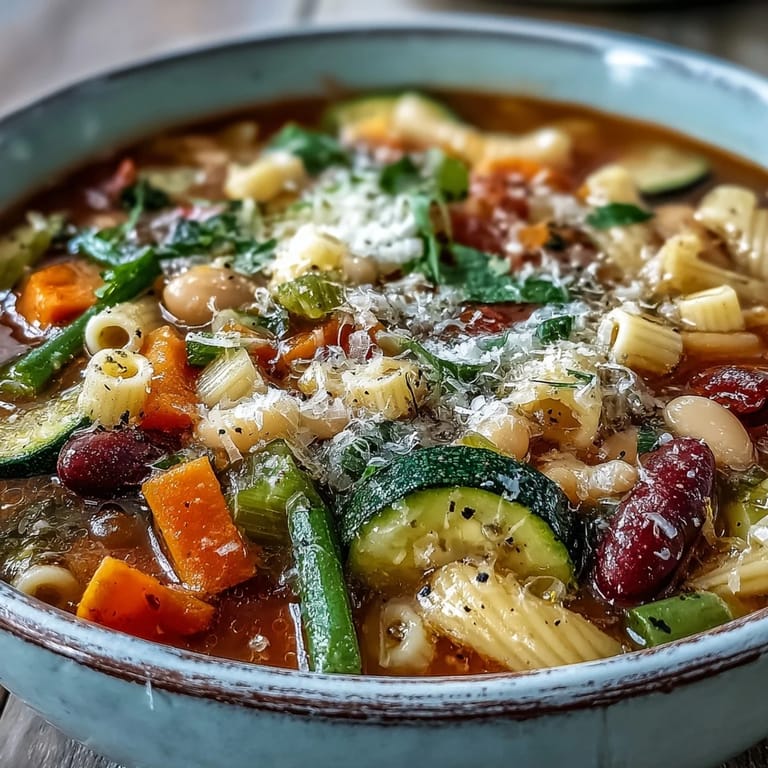
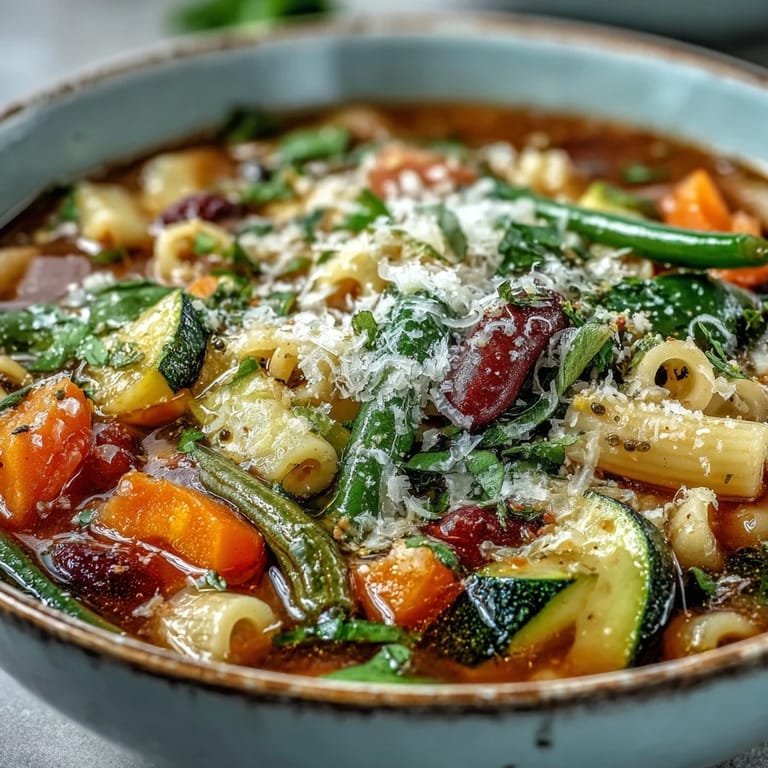
- Zucchini and green beans: These add brightness and texture, and they'll soften into the broth without disappearing completely.
- Spinach or kale: Stir this in at the very end so it keeps its vibrant color and doesn't become an unrecognizable mush.
- Diced tomatoes: Canned is perfectly fine here and honestly more convenient than fresh, with a depth of flavor that's been concentrated by the canning process.
- Vegetable broth: This is your liquid gold; use something you actually like drinking because you'll taste it in every spoonful.
- Oregano, basil, and thyme: Dried herbs work beautifully in soups, and together they create that unmistakable Italian warmth.
- Bay leaf: Don't forget to fish this out before serving, or warn people to watch for it.
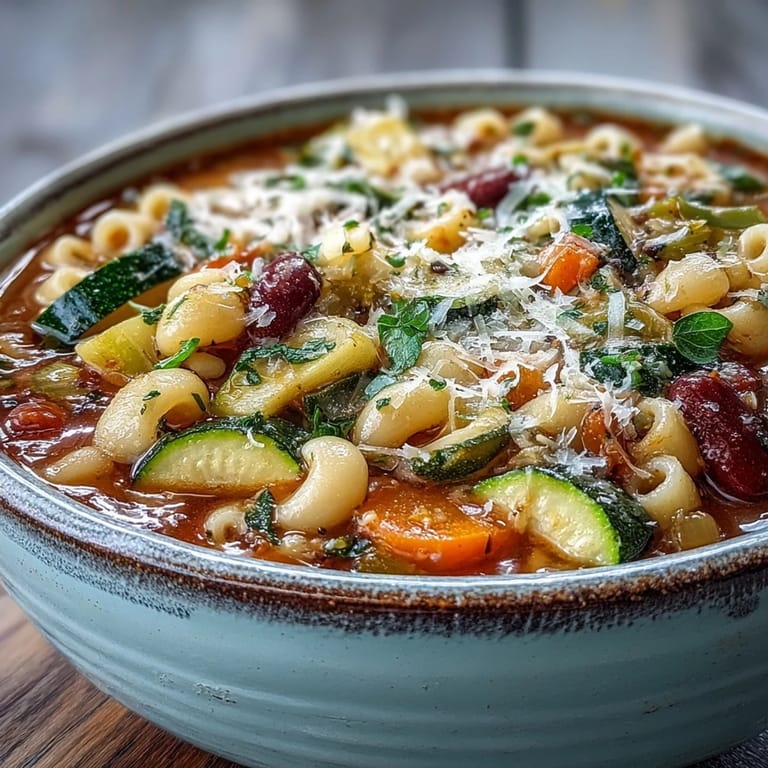
- Small pasta: Ditalini is traditional, but honestly any small shape works; the pasta should feel like part of the soup, not separate.
- Cannellini and kidney beans: Both types give you different textures and a deeper, earthier flavor than using just one.
- Parmesan and fresh parsley: These are your finishing touches, and they transform a simple bowl into something that feels intentional and complete.
Tired of Takeout? 🥡
Get 10 meals you can make faster than delivery arrives. Seriously.
One email. No spam. Unsubscribe anytime.
Instructions
- Start your flavor base:
- Pour olive oil into a large pot and let it warm over medium heat until it shimmers slightly. Dice your onion, carrots, and celery into roughly even pieces, then add them to the oil and let them soften for five to six minutes, stirring occasionally so nothing sticks to the bottom.
- Add brightness and depth:
- Mince your garlic and add it along with diced zucchini and green beans, cooking everything together for three to four minutes until the garlic becomes fragrant and the vegetables start to release their sweetness. You'll notice the aroma change completely at this point, which is your cue that you're on the right track.
- Build your broth:
- Pour in the diced tomatoes, vegetable broth, and all your dried herbs plus the bay leaf, then season with salt and pepper. Stir everything together, bring it to a boil, then reduce the heat to a gentle simmer, cover the pot, and let it cook undisturbed for about fifteen minutes.
- Add the heartiness:
- Stir in your pasta and both types of beans, letting everything simmer uncovered for ten to twelve minutes until the pasta reaches that perfect al dente texture where it still has a slight bite. Taste as you go because pasta absorbs liquid and flavors shift slightly as you near the end.
- Finish with greens:
- Add your spinach or kale and let it wilt for just two to three minutes, then remove the bay leaf before serving. This final green addition keeps the soup feeling fresh and light despite all the beans and pasta.
- Taste and adjust:
- Before you ladle anything into bowls, taste the soup and adjust the seasoning with more salt and pepper if needed, keeping in mind that the Parmesan at the end will add its own salty richness.
 Pin it
 There's a moment in making this soup when everything comes together and you realize that feeding people well doesn't require anything fancy or complicated, just care and attention. It's the kind of meal that shows up in your life again and again, whether it's lunch on a Tuesday or comfort during a hard week.
When to Make This Soup
Minestrone is a soup for any season, though it hits differently depending on the time of year. In summer, it feels light and vegetable-forward; in winter, those beans and pasta make it hearty enough to be a complete dinner. I find myself craving it most on days when I need something honest and unpretentious, something that doesn't demand perfection but rewards attention.
Variations and Swaps
The beauty of minestrone is that it's endlessly adaptable to whatever you have on hand. Potatoes, cabbage, or fresh peas can replace the vegetables I've listed, and I've made versions with white beans only, or added a splash of red wine for depth. The structure stays the same, but the personality changes with each addition you make.
Serving and Storage
Serve this hot with a generous handful of Parmesan, a sprinkle of fresh parsley, and a drizzle of good olive oil on top, ideally alongside crusty bread for soaking up the last spoonful of broth. Minestrone actually improves when it sits overnight as the flavors deepen and meld, and it keeps beautifully in the refrigerator for up to five days or freezes well for a month or longer.
- Reheat gently on the stovetop rather than the microwave so the vegetables don't get overcooked.
- If the soup becomes too thick after a few days, simply add more broth or water to reach your preferred consistency.
- Make a big batch on Sunday and you'll have the kind of lunch all week that feels like someone's taking care of you.
 Pin it
 This soup has a way of becoming your recipe over time, and I hope you'll make it yours by changing it, adapting it, and sharing it with people who need a bowl of something warm. That's when it stops being just a recipe and becomes a small act of kindness.
Recipe Questions & Answers
- → Can I freeze minestrone soup?
Yes, this soup freezes beautifully. Cool completely before transferring to airtight containers. Freeze for up to 3 months. Thaw overnight in the refrigerator and reheat gently on the stove. Note that pasta may soften slightly after freezing.
- → What vegetables work best in minestrone?
Traditional vegetables include onions, carrots, celery, zucchini, and green beans. You can also add potatoes, cabbage, peas, or bell peppers depending on season and preference. The key is cutting vegetables into uniform pieces for even cooking.
- → How do I prevent the pasta from becoming mushy?
Cook the pasta separately until slightly underdone, then add it to the soup during the last few minutes of cooking. Alternatively, you can store leftover soup without pasta and add freshly cooked pasta when reheating individual portions.
- → Can I make this soup vegan?
Absolutely. Simply omit the Parmesan cheese garnish or use a plant-based alternative. The rest of the soup is naturally vegan, as it relies on vegetables, beans, pasta, and olive oil for its rich flavor and satisfying texture.
- → What type of pasta is best for minestrone?
Small pasta shapes work best. Ditalini, elbow macaroni, small shells, or tubetti are traditional choices. These small shapes hold up well in liquid and are easy to scoop up with a spoon. Avoid long pasta like spaghetti or linguine.